De Magnete: William Gilbert and the Birth of "Electricity"
1. Introduction
For thousands of years, humans lived in a state of wonder and confusion regarding the invisible forces of nature. They knew that rubbed amber could pick up chaff and that mysterious rocks called lodestones could pull iron. However, for most of history, these were seen as two sides of the same “magic.” Because both forces could move objects without any physical contact, people believed that amber and magnets both possessed a sort of “soul” or “spirit” that allowed them to reach out and grab things.
There was no clear boundary between the two; they were simply grouped together as “attractions,” and no one truly understood why one worked on iron while the other worked on dust.
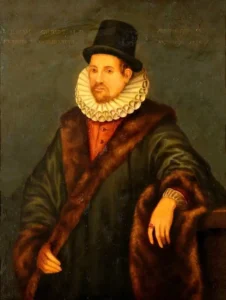
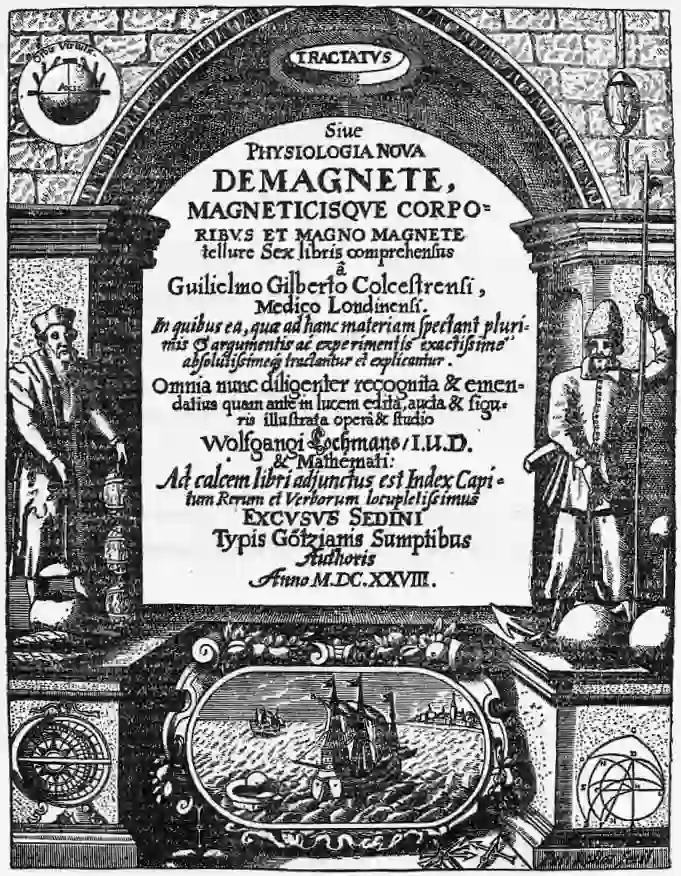
In the year 1600, a man named William Gilbert, who served as the physician to Queen Elizabeth I and later King James I, published a book that cleared the fog. This book didn’t just provide answers; it taught the world a new way to ask questions through experimentation. It was titled De Magnete, Magneticisque Corporibus, et de Magno Magnete Tellure (On the Magnet, Magnetic Bodies, and on the Great Magnet the Earth).
2. The Book that Started it All: De Magnete
Gilbert was a man of action who spent 18 years and a massive amount of his own money to test every claim he could find, eventually proving that magnetism and electricity were distinct “cousins” of the natural world—related, but with very different rules. De Magnete was the first great work of experimental science ever published in England. Gilbert was tired of “armchair philosophers” who made grand claims about nature without ever picking up a tool.
He famously mocked those who believed that garlic could “turn off” a magnet’s power or that diamonds could neutralize a lodestone. To prove them wrong, Gilbert didn’t just write a rebuttal; he performed the tests himself. He rubbed garlic on magnets, held diamonds against lodestones, and showed that the magnetic force remained perfectly strong. By doing this, he signaled the end of the “Era of Mystery” and the start of the “Era of Evidence.”
The book is divided into six books(like chapters), and together they form a complete guide to everything known about magnetism and the newly discovered “electricity” at the time:
- Book 1: Discusses the history of the lodestone, common myths, and the preparation of magnetic materials. Here, Gilbert introduces his most revolutionary idea: the Earth itself is a giant magnet.
- Book 2: This is the most important part for our story! It focuses on “Electric” force and how it differs from magnetism. This is where he officially gives electricity its name and separates it from the “magnetic” category once and for all.
- Book 3: Explains “Direction” and “Verticity.” He explores why a needle always has two poles—North and South—and how they interact through attraction and repulsion. He explains that if you break a magnet in half, you simply get two new magnets, each with its own North and South poles.
- Book 4: Focuses on “Declination.” He explains why a compass needle doesn’t always point exactly to the geographic North Pole but tilts slightly depending on where you are on Earth. This was a vital discovery for sailors trying to cross the Atlantic.
- Book 5: Investigates “Dip.” He noticed that if you balance a needle perfectly on a horizontal axis, it doesn’t just point North; it also tilts downward toward the ground. He realized this tilt was stronger near the poles and flatter at the equator.
- Book 6: A more philosophical section where he discusses his theories on the Earth’s rotation and how it moves in the universe, suggesting that the Earth’s magnetic force might be what keeps it spinning.
3. The Big Discovery: "Electrica"
In Book 2, Gilbert decided to solve the “Amber Mystery.” For centuries, the Greeks called amber elektron. Because only amber was famous for this trick, people thought it was a unique property of that one stone. Gilbert suspected that this power might be hidden in other materials as well, if only someone bothered to look.
Gilbert decided to be thorough. He gathered dozens of different materials—precious gems, common rocks, metals, and various resins. He discovered that the “amber effect” wasn’t rare at all! He found that diamonds, sapphires, glass, sulfur, opal, and even sealing wax could all be made to attract light objects if they were rubbed vigorously with silk or wool.
To describe this “amber-like” power found in so many things, he coined a new Latin word: Electrica. From this word, we get our modern term “Electricity.” It literally translates to “things that behave like amber.” By expanding the list of materials, Gilbert proved that electricity was a general property of matter, not a specific “magic” of one stone.
Gilbert’s Classification:
Electrics: Materials like glass, sulfur, and resin that “wake up” and attract small things when rubbed. He found that these materials were usually smooth, dry, and often transparent.
Non-Electrics: Materials like metals, wood, or wet objects that seemed to have no such power.
The Lesson: Gilbert noticed that “Electrics” were usually very dry. If a material was damp or even if he breathed on it, the power would vanish. This was the first hint that moisture acts as a “thief” that steals electrical power away, a concept we now understand as conductivity. It is important to note that today, scientists no longer use Gilbert’s terms “Electrics” and “Non-Electrics.” Instead, we use the words Insulators and Conductors.
- Most of the materials Gilbert called “Electrics” (like glass and plastic) are what we now call Insulators. These materials hold onto their electricity and don’t let it flow away easily.
- The “Non-Electrics” (like metals and water) are what we now call Conductors. These materials allow electricity to flow through them so quickly that it vanishes before we can see it attract anything!
4. The First Scientific Instrument: The Versorium
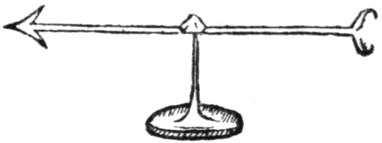
Gilbert realized that his fingers were too clumsy to detect very weak electrical pulls. He needed a “sensor” that could react to the tiniest forces, much like a hunter needs a sensitive dog to track a scent. To solve this, he invented the Versorium, which is recognized today as the world’s first electroscope.
The design was genius in its simplicity: he took a light metal needle (made of brass or silver so it wouldn’t be magnetic) and balanced it carefully on a sharp pin, allowing it to spin with almost zero friction.
The Experiment: He would rub a piece of glass or a diamond and bring it close to one end of the Versorium.
The Result: Even if the pull was too weak to lift a heavy object, the perfectly balanced needle would swing around to face the rubbed object instantly.
Why it mattered: This proved that electricity wasn’t just a “weak version of magnetism.” It was a force that worked on almost anything—paper, wood, gold, and even drops of water. Magnets only cared about iron; Electricity was a universal attractor.
5. Magnetism vs. Electricity: The Great Split
Gilbert was the first to explain that while these two forces both “pull,” they are fundamentally different. He identified several key points that separate them:
The Source of the Force: Magnetism is found naturally in materials like Lodestones and does not need any help to work. Electricity, however, is a “sleeping” force that must be “excited” or woken up by rubbing the material.
Strength and Reach: Magnetic force is very strong and rugged; it can pull objects through a flame, through water, or even through a solid wooden table. Electricity is much more delicate and can be easily “smothered” by smoke, moisture in the air, or even the warmth of a person’s breath.
The Choice of Materials: Magnets are extremely picky and mostly only attract iron or other magnets. In contrast, once an object is “Electric,” it is not picky at all; it will attract almost anything light enough to move, such as hair, dust, and light metals.
The Theory of Cause: Gilbert believed magnetism was caused by the “internal soul” or the very form of the magnet. For electricity, he proposed the theory of Effluvia—a thin, invisible “sticky vapor” that leaked out when a material was rubbed and reached out to pull small things back.
The Theory of "Sticky Air" (Effluvia)
Gilbert had a very interesting way of imagining how electricity worked. He thought that when you rub a piece of glass, the heat and friction cause a thin, invisible “vapor” or “fluid” to leak out of the material. He called this Effluvia.
He imagined this Effluvia reaching out like invisible, sticky arms to grab nearby dust or paper and pulling them back in as the vapor returned to the object. He compared it to how the atmosphere pulls things toward the Earth. While we now know about electrons and electric fields, Gilbert’s “Effluvia” theory was a massive step forward because it provided a physical, mechanical explanation instead of relying on “magic” or “spirits.”
6. The "Terrella": Why the Earth is a Giant Magnet
Gilbert’s most famous and dramatic experiment involved a Terrella (Latin for “Little Earth”). He spent months carving a large, high-quality lodestone into a perfect sphere to represent our planet. He didn’t just want to guess why compasses worked; he wanted to build a miniature model of the world to test his theories.
He then took a small compass needle and moved it all over the surface of this “Little Earth.” He discovered something incredible:
The Pole effect: The needle behaved exactly on the sphere as a sailor’s compass behaves on the ocean. It always pointed toward the “poles” of the stone ball.
The Dip: Near the “Equator” of his sphere, the needle stayed flat. But as he moved it toward the “North Pole” of the stone, the needle started to tilt downward (dip) toward the surface.
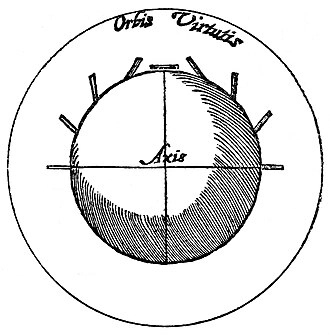
This led him to his greatest conclusion: The Earth itself is a giant magnet! Before Gilbert, people thought compasses pointed North because of the North Star. Gilbert proved the force comes from the Earth’s core. This discovery explained why navigation was possible and gave birth to the science of Geophysics, changing our understanding of the planet forever.
7. Conclusion
William Gilbert taught the world that science is about evidence. He threw away the old stories and replaced them with tables, measurements, and tools. By separating magnetism from electricity, he laid the foundation for every electronic device we use today.
He gave us the name Electricity, invented the first tool to measure it, and proved that we are living on top of a giant, spinning magnet. He showed us that even the most “mysterious” parts of nature can be understood if we are willing to experiment and observe carefully.
8. Experience It Yourself: Versorium and Terrella (DIY)
Let’s build our own Versorium and Terrella and understand what Gilbert experienced hundreds of years ago.
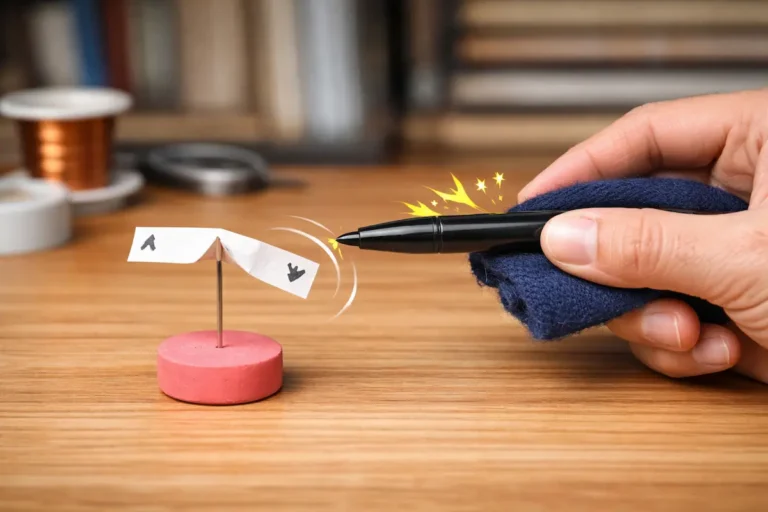
Experiment 1: The Versorium
Materials needed:
- A plastic pen or a comb.
- A small piece of stiff paper (or a toothpick).
- A sewing needle or a long pin.
- An eraser (to act as a base).
Steps:
- Push the pin vertically into the eraser so the sharp end points up. Be careful!
- Fold a small strip of paper in half to find the center, then balance it on top of the pin. It should be able to spin as easily as a see-saw.
- Rub your plastic pen against your hair or a dry woollen sweater for about 20 seconds. This “excites” the “Electric.”
- Slowly bring the pen near one end of the balanced paper.
Observation: You will see the paper “needle” swing toward your pen. You have just used electricity to move an object without touching it—just like William Gilbert did in the year 1600!
Experiment 2: The Terrella
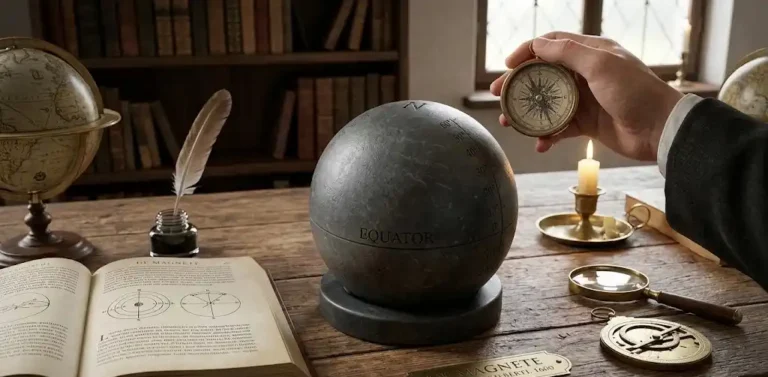
Materials needed:
- A solid magnetic sphere (e.g., a neodymium sphere magnet).
- A small handheld compass.
- A small non-magnetic stand (like a plastic bottle cap) to hold the sphere.
Steps:
- Place the magnetic sphere on your stand. It might take a moment to find which parts are the “North” and “South” poles using your compass.
- Mark the North and South poles. The area exactly between them is the “Equator” of your Little Earth.
- Hold your compass and move it slowly along the surface of the sphere, traveling from the Equator toward one of the Poles.
What do you see?
- At the Equator, the compass needle points toward the pole but stays flat (parallel) against the sphere’s surface.
- As you move toward the Poles, the needle begins to tilt or “dip” downward.
- Directly over the Pole, the needle will try to stand straight up and down, pointing directly into the sphere!
9. FAQs
Why did Gilbert choose the word "Electricity" specifically?
He went back to the roots of the mystery. The Greek word for amber is elektron. Since amber was the “original” material famous for attracting light objects, Gilbert used the Latin word Electrica to mean “materials that act like amber.” If he had discovered this property in diamond first, we might be calling it “Diamondicity” today!
Why did Gilbert fail to find electricity in metals (Non-Electrics)?
This is a classic case of a scientist being “right” about the observation but “wrong” about the reason. Gilbert noticed that metals didn’t attract dust when rubbed. He labeled them “Non-Electrics.” We now know that metals are actually Conductors. They do get an electric charge when rubbed, but because they are so good at moving electricity, the charge flows through the metal and into the person’s hand instantly. To Gilbert, it looked like nothing was happening!
Before the Terrella experiment, where did people think the "North" force came from?
For centuries, sailors believed that compasses pointed North because of a “Magnetic Mountain” at the top of the world or because they were being pulled by the North Star (Polaris). Gilbert’s “Little Earth” experiment was revolutionary because it proved the force wasn’t coming from the sky or a distant mountain—it was coming from the very ground beneath our feet.
Can we still see "Magnetic Dip" today?
Yes! If you take a compass to the North Pole, the needle won’t point “forward”—it will try to point straight down into the ground. This is exactly what Gilbert demonstrated with his spherical magnet. The “dip” is the reason modern compasses have to be specially balanced depending on whether they are being used in the Northern or Southern Hemisphere.
10. Content Resources
Books
- “On the loadstone and magnetic bodies, and on the great magnet the earth”—a translation by Paul Fleury Mottelay (1893)
- “A history of electricity from antiquity to the days of Benjamin Franklin”—by Park Benjamin (1898)
“The History and Present State of Electricity, with Original Experiments”—by Joseph Priestley (1761)