Amber: The Stone That Named Electricity
Amber and Electricity
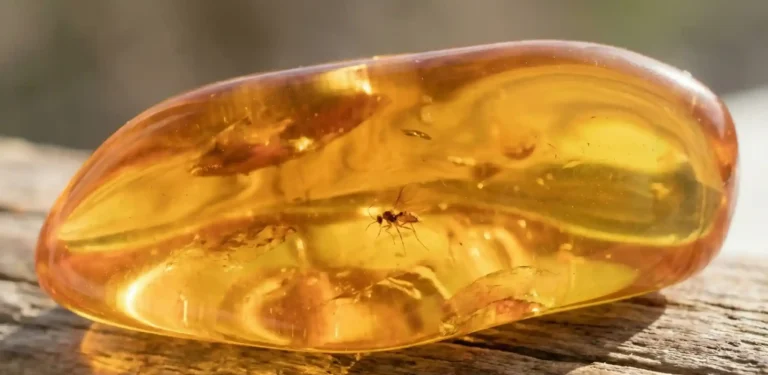
The connection between amber and electricity is ancient. Amber is a beautiful, golden-orange stone formed from the resin of ancient trees that lived millions of years ago. When you hold it, it feels warm and smooth. Look closely, and you might even see tiny insects trapped inside—frozen in time like natural time capsules. In ancient times, amber was highly prized as jewelry and adorned people across Greece from the earliest recorded history.
But amber’s true fame comes from something remarkable: the “magic” that happens when you rub it. Suddenly, it gains the power to attract light objects like feathers, straw, or bits of paper. Around 600 BCE, a Greek thinker named Thales recorded this observation—the first documented discovery of its kind in Western history. Back then, it seemed pure magic. Today, we know it as static electricity or triboelectric effect: the buildup of electrical charge when materials rub together. Don’t worry if that sounds technical—it will all become crystal clear as we explore deeper!
Thales' Soul Theory: A Clever Explanation
How did Thales make sense of this mysterious force? He reasoned that because rubbed amber could make things move without touching them, it must possess a “soul”—an invisible life force animating it.
He applied the same logic to lodestones (magnets), which attracted iron without contact. If amber had a soul, surely lodestones did too. Later, the historian Diogenes Laertius documented how Thales used both amber and magnets to argue that even seemingly inanimate objects possess some form of life. It was a brilliant attempt to explain the inexplicable using the knowledge of his time.
Centuries of Observation, But Little Progress
After Thales, other thinkers continued noticing the amber effect—but progress stalled for nearly 2,000 years.
Theophrastus (c. 321 BCE) discovered that lyncurium (a stone similar to tourmaline) also attracted objects, and even more powerfully than amber—it could pull thin pieces of copper and iron!
Pliny the Elder (23–79 CE), Solinus (3rd century CE), and Priscian (6th century CE) all documented that amber, when rubbed and warmed by friction, attracts dried leaves, straw, and light materials.
Koupho (295–324 CE), a Chinese physicist, even compared the magnet’s attraction to iron with amber’s ability to draw mustard seeds—a fascinating cross-cultural observation.
How "Electricity" Got Its Name
When William Gilbert systematically studied amber and other materials in 1600, he discovered something profound: amber was not unique.
Glass, crystals, certain stones—all could be made to attract light objects when rubbed. This wasn’t magic tied to a single mysterious stone. It was a universal force present in many materials, waiting to be understood.
Gilbert recognized this deserved a name. He took the ancient Greek word elektron (meaning amber) and created the Latin term electricus—”amber-like” or “having the properties of amber.” When English speakers adopted this word, it became electricity.
Every time you say the word “electricity,” you’re echoing the attractive power of amber first described by Thales of Miletus.
Conclusion
Despite all the observations starting from Thales, understanding stayed frozen in place. People saw it. Scholars described it. The question remained: Why does this happen? No one could answer it in a scientific way, and real progress had to wait until William Gilbert’s work in 1600—a story we’ll explore in the next period.
Experience It Yourself: The Amber Effect (DIY)
The best way to truly understand Thales’ observation is to replicate it. Try these simple experiments using items you likely have at home.
Experiment 1: The Rubbed Plastic Rod
What You Need:
A plastic rod, ruler, or comb
Wool cloth or dry hair
Small paper pieces (pea-sized)
What To Do:
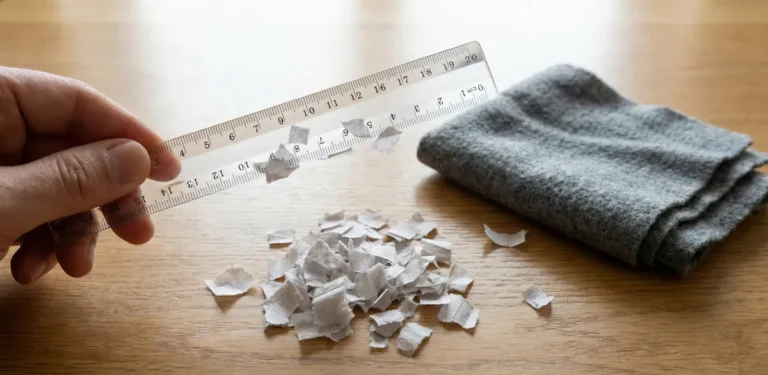
Tear paper into tiny pieces and scatter them on a clean table.
Rub the plastic rod hard on wool or dry hair for 30 seconds.
Slowly bring the rod close to the paper—about 1-2 cm away, but don’t touch.
Watch the magic! Paper pieces jump toward the rod and cling to it.
What You’re Experiencing:
Thales saw exactly this 2,600 years ago. He didn’t know why it happened. Now you do—it’s static electricity, charge building up through friction. But the wonder? That’s timeless.
Experiment 2: The Salt and Pepper Separation
What You Need:
Salt and black pepper mixed together
Plastic spoon or rod
Wool cloth
Plate
What To Do:
Mix salt and pepper evenly on a plate.
Rub the plastic spoon with wool for 30 seconds.
Hold the charged spoon just above the mixture—about 1-2 cm up.
Slowly move it across. Watch! Pepper particles jump up and stick to the spoon. Salt remains behind on the plate.
What You’re Experiencing:
Pepper is lighter than salt, so the electrical force pulls it more strongly. This shows how selective and powerful the attractive force is—different materials respond differently. Ancient peoples observing amber likely noticed this too: some objects were drawn more strongly than others, yet they couldn’t explain why.

FAQs about Amber
Is amber actually a stone?
Technically, no—even though we often call it a “gemstone.” Unlike true stones (which are minerals), amber is actually fossilized tree resin. It feels like a stone because it has hardened over millions of years, but if you heat it, it will eventually burn!
Why is it called "electricity"?
It all goes back to amber. The Ancient Greek word for amber is “ēlektron.” When scientists later studied the force of static attraction, they named it after the material that started it all. “Electricity” literally means “behaving like amber.”
Did Thales discover electricity?
He discovered the phenomenon, but he didn’t understand the science. Thales observed that rubbed amber attracted feathers, but he believed the amber had a “soul” or life force. He had no concept of positive or negative charge.
How is amber different from a magnet?
This is the most important distinction in early science!
Activation: Amber must be rubbed to attract things (temporary). A magnet works permanently without rubbing.
Target: Amber attracts everything light (paper, feathers, hair). A magnet attracts only specific metals (iron).
Content Resources
Books
“The History and Present State of Electricity, with Original Experiments”—by Joseph Priestley (1761)
“Bibliographical History of Electricity and Magnetism”—by Paul Fleury Mottelay (1922)
“The Experimental and Historical Foundations of Electricity”—by A.K.T. Assis (2010)
Websites
Electricity and Magnetism: The University of Virginia’s “Historical Beginnings of Theories of Electricity and Magnetism”
- Electricity and Magnetism: NASA’s “Early History of Electricity and Magnetism”